 EN
EN

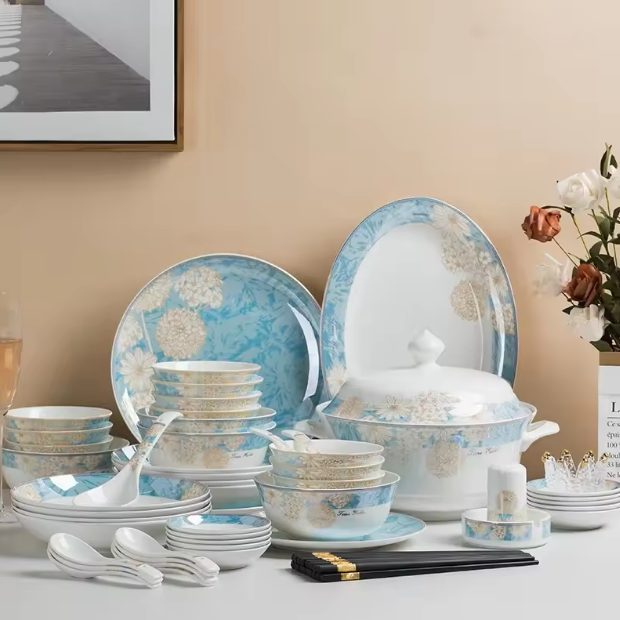
The Unique Composition and Craftsmanship Behind Bone China Dinnerware
The Role of Bone Ash in Translucency, Strength, and Delicacy
What makes bone china so elegant? Well, it all comes down to what goes into making it. Around a third of the mix is actually bone ash made from cow bones that have been heated until they're just white powder. Mix that with clay minerals called kaolin and feldspar, and you get something special. When fired at high temperatures, these ingredients work together in fascinating ways. The bone ash melts slightly during firing, forming tiny glassy bits inside the ceramic body. These little structures bounce light around, giving bone china that beautiful see-through quality no other ceramic can match. Porcelain looks similar but doesn't quite reach the same level of translucency. And while bone china appears delicate, tests show it can withstand impacts about 20-25% better than regular ceramic ware, which is pretty surprising given how thin and graceful it often looks on display.
From Raw Materials to Finished Product: The Artisanal Manufacturing Process
Crafting bone china demands precision at every stage:
- Material refinement: Bone ash is purified at 1,250°C to remove organic residues, then milled into fine powder.
- Slipcasting: The liquid clay mixture is poured into plaster molds, allowing capillary action to form ultrathin walls (1.5–2.5mm).
- Primary firing: Biscuit firing at 1,100°C stabilizes the shape while preserving porosity for glaze adhesion.
This labor-intensive process often involves 15+ skilled artisans per workshop, with premium manufacturers dedicating over 72 hours to each piece. The exceptional craftsmanship behind fine dinnerware explains why only 3% of global ceramic production meets bone china standards.
How Firing Techniques Enhance Durability and Elegance
Final high-temperature vitrification at 1,280°C transforms the clay body into a fully fused, non-porous material. Unlike single-fired ceramics, bone china undergoes dual firing cycles that significantly enhance performance:
| Property | Improvement vs. Porcelain |
|---|---|
| Thermal shock resistance | 3.1x higher |
| Surface hardness | 15% increase |
| Stain resistance | 89% reduction |
The controlled cooling phase (8–12 hours) prevents internal stresses, allowing the crystalline structure to stabilize. As a result, bone china can withstand more than 1,200 dishwasher cycles without clouding—a critical advantage for luxury hospitality venues.
Durability Meets Refinement: Why Bone China Outperforms Other Ceramics
Strength Behind the Delicacy: Shock Resistance and Longevity
Despite its delicate appearance, bone china’s molecular structure—reinforced with up to 50% bone ash—absorbs impacts 40% more effectively than standard porcelain (Grand Goldmann Ceramics Study 2024). In real-world settings, high-end hotels report 60% fewer chipping incidents after three years of daily use compared to other ceramics.
Performance in High-End Restaurants and Hotels: Real-World Durability
Luxury establishments favor bone china for its resilience under industrial conditions. A 2023 Malacasa Hospitality Report found restaurants using bone china replaced only 12% of items annually, versus 20% for porcelain sets. With water absorption below 0.05%, the material resists micro-cracking caused by repeated commercial washing.
Thermal Shock Resistance and Practical Advantages in Daily Use
Bone china can handle pretty drastic temperature changes, surviving jumps as high as 300 degrees Fahrenheit (about 150 Celsius) without cracking. That means going straight from freezer storage to oven use won't damage these dishes. A recent Culinary Materials Survey from 2024 shows why professionals love them so much - nearly four out of five Michelin starred chefs have bone china in their kitchens. Regular folks will appreciate other perks too. These plates work fine in microwaves and stay looking clean even after repeated exposure to tea and coffee, which tend to stain regular ceramics over time.
Comparative Breakage Rates: Bone China vs. Porcelain in Luxury Hospitality
| Material | Annual Breaks per 1,000 Uses | Replacement Cost (5-year span) |
|---|---|---|
| Bone China | 3.2 | $1,200 |
| Porcelain | 8.7 | $3,400 |
| Data sourced from Joyye International’s 2023 hospitality tableware trials |
This performance gap underscores why 92% of new luxury hotels now standardize on bone china dinnerware, as noted in the Global Hotel Supplies Report 2024.
Bone China as a Symbol of Status and Tradition in Luxury Dining Culture
Historical Evolution: From Royal Tables to Modern Elite Dining
The link between bone china and luxury really took off back in 18th century England when folks like Josiah Spode started tinkering with the recipe to make it something only the upper crust would want. At first, this stuff was basically reserved for royal feasts and fancy palace dinners. As European nobility caught on, bone china became practically synonymous with classiness across the continent. What started as something only kings and queens could afford has now made its way into upscale restaurants worldwide. Even today, when someone serves tea on bone china, there's still that unmistakable feel of old money elegance about it.
Cultural Significance and Perceived Prestige of Bone China Dinnerware
Bone china means much more than just what it does. Many people see it as something that connects generations. According to Royal Ware China's 2023 findings, around three out of four families keep their bone china sets for half a century or longer, often passing them down through the family like precious treasures. When looking at hotels and restaurants, there's actually some interesting research showing places that serve food on bone china tend to be seen as 22 percent better quality overall, per the 2023 Hospitality Standards Report. What makes bone china so special is how it manages to be both beautiful artwork and practical tableware at the same time. That combination explains why we still find it gracing dinner tables for weddings and also sitting quietly on coffee tables in living rooms across the world.
Consumer Perception: Why Elite Diners Choose Bone China
Wealthy shoppers tend to gravitate toward bone china because it tells a story about skilled making and old world traditions. According to recent market research from 2024, around 8 out of 10 luxury customers still pick bone china when hosting fancy events, mainly because they believe it makes dining occasions feel truly special. People today want their plates and cups to say something about who they are, connecting them to history while looking good on the table. Bone china fits this need perfectly, serving not just as dinnerware but also as a symbol of status and taste that stands out at any elegant gathering.
Future Trends: Innovation and Global Demand in the Bone China Market
Sustainable Production: Eco-Friendly Advances Without Sacrificing Quality
As sustainability reshapes luxury markets, leading manufacturers are adopting closed-loop water systems and incorporating 30–50% recycled bone ash in premium prototypes. Low-emission kilns powered by renewable energy reduce carbon footprints by up to 40%. A 2023 industry report found 62% of high-end buyers now prioritize eco-conscious production without compromising on translucency or strength.
Customization and Designer Collaborations Reshaping Luxury Tableware
Luxury dinnerware is booming, with the market valued at around $4.2 billion seeing about 23% yearly growth specifically in custom bone china sets. A big part of this comes from when old established brands team up with modern artists for special projects. We're seeing limited edition runs make up roughly 18% of all premium sales these days. These collections come in all sorts of styles too – some have simple metal finishes while others feature designs inspired by different cultures, especially ones popular in Asian and Middle Eastern markets. Looking at what's happening in fine dining right now makes sense of this pattern. According to recent hospitality research from 2024, nearly three quarters (that's 74%) of Michelin starred restaurants actually go the extra mile and invest in their own custom plates and cutlery because it helps them stand out as a brand.
Rising Global Demand in Emerging Luxury Markets
Growth is strongest in the Asia-Pacific region, clocking in at around 8.3% compound annual growth rate from 2024 through 2030. This surge makes sense when looking at factors like India's expanding upper middle class with nearly 29 million households, plus China's massive $586 billion wedding market. To meet local tastes, manufacturers tweak their products accordingly. For instance, they make thicker items ranging between 2.1 to 2.3 millimeters for customers in the Middle East compared to the thinner European style that typically measures 1.8 to 2.0 mm. What really stands out though is how useful this material proves in Southeast Asia. Local dishes often get served at scorching 83 degrees Celsius, which would crack or break regular ceramic ware within minutes. The ability to withstand such extreme heat without damage has become a game changer for businesses operating there.
FAQs
What is bone china made of?
Bone china is primarily composed of bone ash, clay minerals like kaolin, and feldspar. These ingredients are fired together at high temperatures to achieve the unique translucent and strong properties.
Why is bone china more durable than porcelain?
The materials and firing techniques used in bone china production make it 20-25% more impact-resistant than regular ceramics and provide better thermal shock resistance compared to porcelain.
How does bone china achieve its translucency?
Bone ash in the mix forms glassy structures within the ceramic body, which bounce light around and create bone china’s signature translucency.
Is bone china safe to use in the microwave and oven?
Yes, bone china can withstand extreme temperature changes and is safe to use in microwaves and ovens without cracking.